
 TR
TR  EN
EN 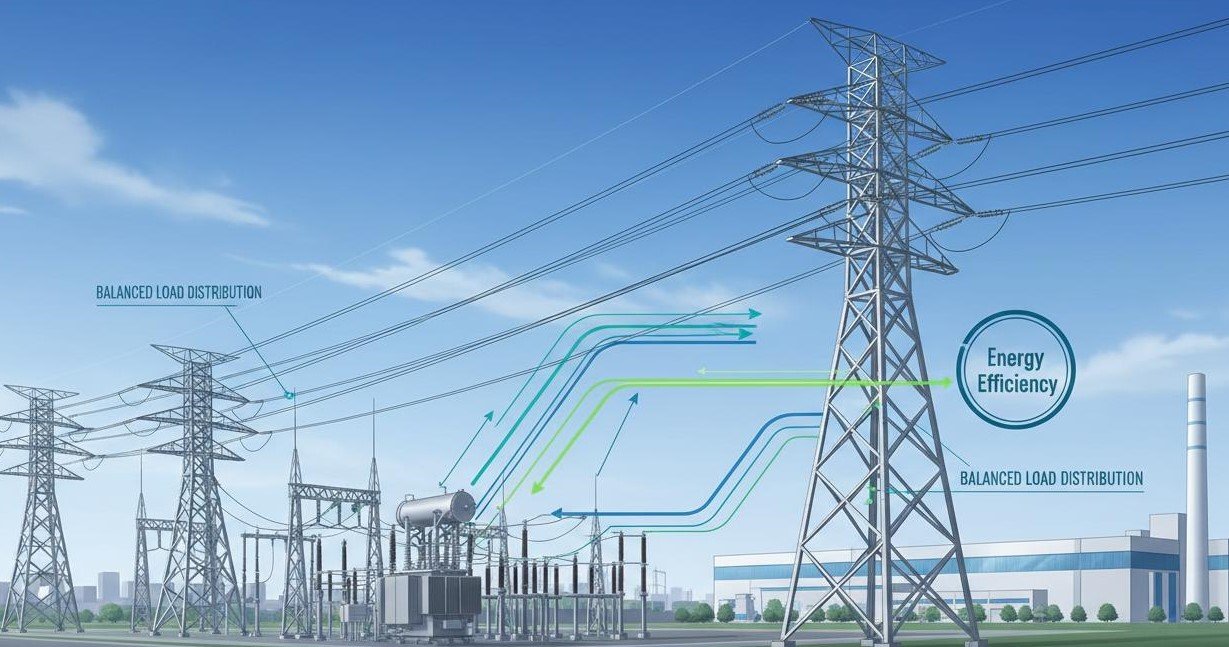
The difference between single-phase and three-phase power goes well beyond the number of conductors in the installation. The connected load, motor requirements, available distribution system and the equipment that a generator must supply all influence the correct phase configuration. Single-phase power is often sufficient for smaller loads, while three-phase systems are better suited to installations with larger motors and higher power demand.
1. The Basic Difference Between Single-Phase and Three-Phase Power
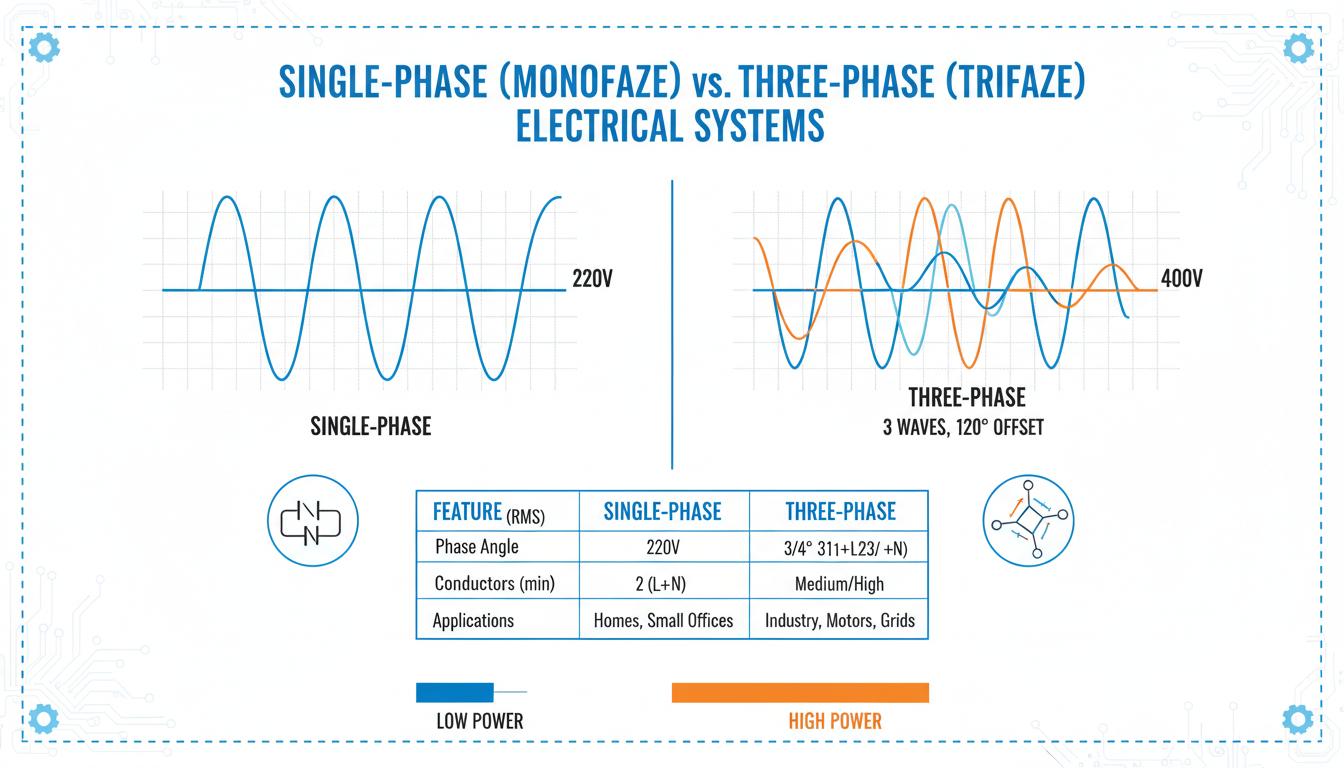
In a common 230/400 V low-voltage system, single-phase loads are supplied at 230 V between phase and neutral. A three-phase system provides three phases, with 400 V available between phases. The three AC voltage waveforms are displaced from one another by 120 electrical degrees.
A three-phase installation may be designed with or without a neutral conductor. Where 230 V single-phase loads must also be supplied from a 230/400 V distribution system, a neutral is normally provided. Other three-phase applications may use a different connection arrangement.
| Technical Feature | Single-Phase | Three-Phase |
|---|---|---|
| Phase Configuration | One phase; commonly used with neutral | Three phases; neutral depends on the system configuration |
| Common Phase-to-Neutral Voltage | 230 V | 230 V in a 230/400 V system with neutral |
| Common Phase-to-Phase Voltage | Not applicable | 400 V |
| Phase Relationship | One AC phase | 120° between phases |
| Typical Applications | Residential, light commercial and portable loads | Industrial plants, larger commercial facilities, motors and machinery |
2. How a Single-Phase System Works
A single-phase supply uses one alternating-voltage phase. In a phase-to-neutral circuit, current passes through the load and returns through the neutral conductor. Lighting, socket circuits, office equipment and many domestic appliances operate comfortably from this type of supply.
There is no universal kW limit that can be applied to every single-phase installation. Available capacity depends on the service connection, protective devices, conductor size, allowable current and the design of the electrical installation. For that reason, a fixed statement such as “single-phase power cannot be used above a certain kW value” is not a reliable basis for system design.
3. How a Three-Phase System Works
A three-phase supply has three alternating voltages separated by 120 electrical degrees. The arrangement allows larger loads to be supplied and gives designers the ability to distribute the total demand across three phases.
This is why three-phase motors are common in pumps, compressors, fans, production machinery and larger HVAC systems. The important point is not simply that three-phase power can serve larger loads. The distribution system must also be designed so that the connected equipment and phase loading are appropriate for the installation.
How Can the Phase Configuration Be Identified?
The main switch, protective devices and conductor arrangement in a distribution board can provide an initial indication of the supply type. They should not be treated as the only evidence. Equipment labels and supply information should be checked, and where necessary the voltages should be measured by a qualified electrical technician using suitable test equipment.
4. Why Phase Configuration Matters in Generator Selection
Generator selection cannot be based on total kW or kVA alone. The phase configuration of the loads, motor starting behaviour, power factor and the sequence in which loads are connected all affect the demands placed on the generator set.
Motors, pumps and compressors can impose a very different electrical demand while starting than they do once they are running normally. If this transient demand is ignored during generator sizing, starting a large motor may produce an unacceptable temporary drop in generator voltage or frequency.
When Does a Single-Phase Generator Make Sense?
Where all or most of the connected equipment consists of 230 V single-phase loads, a correctly sized single-phase generator can be the simpler choice. Portable applications, smaller businesses, some residential standby systems and temporary site power are typical examples.
When Is a Three-Phase Generator Required?
A three-phase generator is appropriate where the installation contains motors, production machinery or other equipment that requires a 400 V three-phase supply. Factories, construction sites, pumping systems and larger commercial installations commonly fall into this category.
Using a three-phase generator does not mean that every connected load must be three-phase. If the alternator connection and neutral arrangement allow it, single-phase loads can also be supplied.
5. Balancing Single-Phase Loads on a Three-Phase Generator
When single-phase loads are connected to a three-phase generator, placing most of them on one phase is poor practice. The loads should be distributed as evenly as practical across L1, L2 and L3.
If one phase carries substantially more load than the others, the generator's full capacity may not be usable and phase-voltage imbalance can increase. For this reason, a proper load schedule should show not only the total connected load but also how much demand is placed on each individual phase.
In a facility with many single-phase lighting and socket circuits, distributing those circuits between the three phases helps maintain a better-balanced generator load.
6. Motors and Starting Loads
Motor loads deserve separate attention in an industrial generator project. The normal running power shown on the motor nameplate does not tell the whole story. A motor started directly across the line can draw a high current for a short period, producing a temporary voltage dip at the generator.
Motor rating, starting method, mechanical inertia, other loads already connected to the generator and the acceptable voltage dip should be considered together. Projects with large motors are better assessed with generator-sizing software or a detailed engineering calculation rather than a simple addition of nameplate kW values.
7. Comparing Single-Phase and Three-Phase Systems
| System | Where It Works Well | Points to Consider |
|---|---|---|
| Single-Phase | Simpler infrastructure, compatibility with common 230 V equipment, practical for smaller loads | Cannot directly supply equipment requiring a three-phase source; available capacity depends on the installation |
| Three-Phase | Suitable for higher-power equipment, three-phase motors and distribution of loads between phases | Phase sequence, load balance, neutral arrangement, protection and distribution design must be correct |
8. Is Voltage Drop Determined by the Number of Phases?
No. Voltage drop cannot be assessed simply by deciding that one system is single-phase and the other is three-phase. Circuit length, current, conductor cross-section, conductor characteristics, system voltage and load power factor all influence the result.
Three-phase distribution can offer practical advantages when larger amounts of power must be transmitted at suitable voltage and current levels, but conductor sizing and allowable voltage drop still need to be calculated for the actual installation.
9. Frequently Asked Questions
Can a home have a three-phase electricity supply?
Yes. A residential property can have a three-phase connection where the local supply arrangement permits it. The need depends on the connected load. EV charging equipment, large heat pumps, lifts or workshop machinery are examples of loads that may make a three-phase connection useful.
Can 230 V single-phase equipment run from a three-phase system?
Yes. In a suitable 230/400 V three-phase system with a neutral conductor, a 230 V single-phase load can be connected between one phase and neutral. Single-phase loads should be distributed between the available phases rather than concentrated on one phase.
Is a three-phase generator always better than a single-phase generator?
No. The correct generator is the one that matches the actual load. In a small installation containing only single-phase equipment, choosing a three-phase generator does not automatically provide a technical or economic advantage. Where three-phase motors and higher-power machinery are present, the three-phase configuration becomes the appropriate choice.
Choosing the Right Phase Configuration
The decision should start with the load list, not the generator catalogue. Identify which equipment is single-phase or three-phase, how motors start, which loads operate at the same time and how much future capacity is likely to be required. The existing electrical distribution system then has to be considered alongside those requirements.
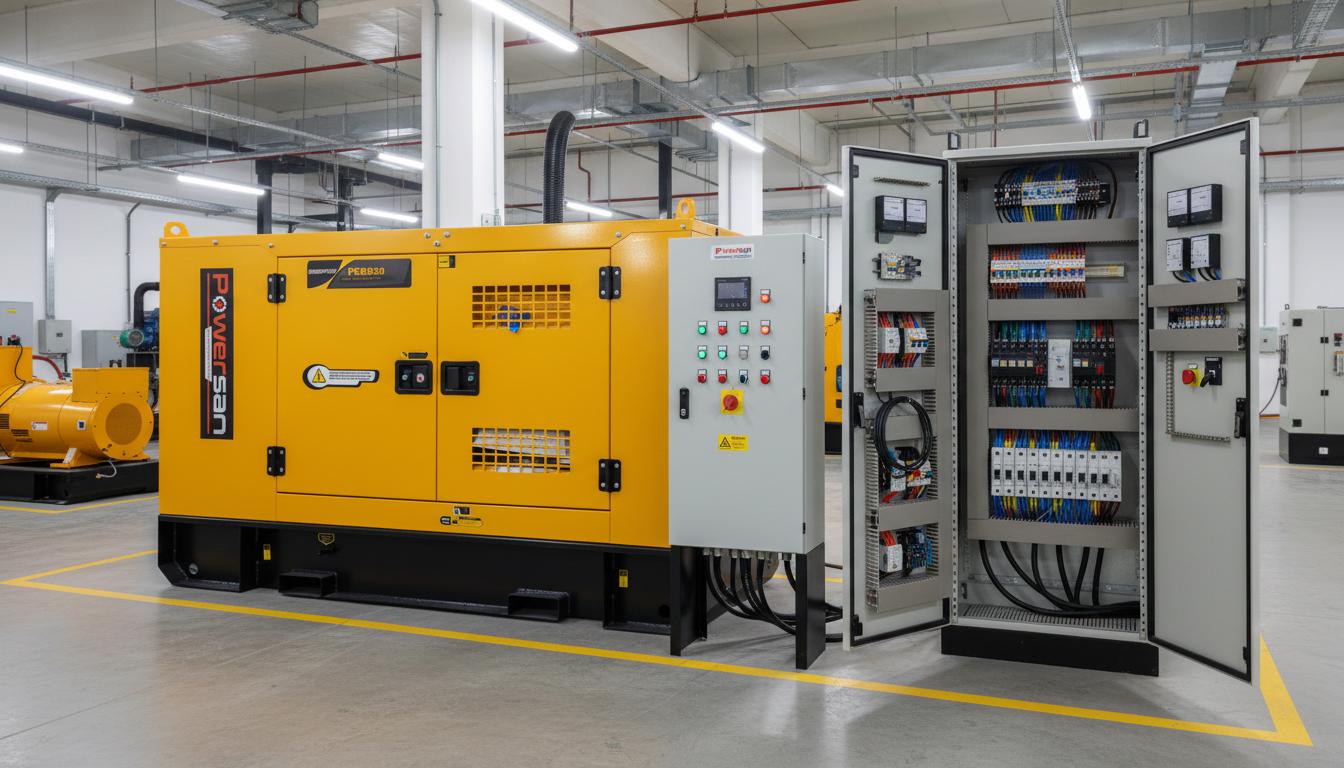
For Powersan generator projects, load characteristics and site conditions are evaluated together when selecting generator capacity, voltage and phase configuration. In installations with a mixture of single-phase and three-phase loads, phase distribution is part of the sizing work rather than an adjustment left until commissioning.
```